
Jacob's Ladder, NYC
Was it North Face that pioneered expedition-class gear as casual wear? I can't pinpoint it, but some time in the 1990's, I remember seeing people walking down the streets of New York with scuba gear on a rainy day. Hey, I'm all for testing products in extreme conditions, but there comes a point where pro-grade should be left to the pros.
Enter the BaileyWorks SuperPro Messenger Bag.

The Portsmouth, New Hampshire, bag designer describes this baby as "Built for the Working Bike Messenger" and loads it up with a Cordura shell, waterproof lining, a blink-light clip and reflective strip, and options for customization when ordering online. More importantly, it has an innovative "split strap," which is a kind of extra harness that snugs the bag across your chest and keeps the one-shoulder bag from flopping forward. The strap is reversible, so you can wear the bag on your right or left shoulder.
The SuperPro runs from $145 in small to $185 for XX-large (presumably for that extra yard of pricey Cordura?). And, true, there ain't a blueprint, estate deal or urgent law brief it can't handle.
Now, are you a professional bike messenger, racing through the streets of New York, Chicago and San Fran on a tarot-card-studded fixie? Probably not. You're probably like me. I'm a daily bike commuter lugging my laptop, lunch and papers to the office, on the same steel 18-speed I use for weekend warrior rides. For a messenger bag, I use this:

It's a piece of swag (thanks, Salon.com) from the Cartoon Network, promoting a show called Out of Jimmy's Head. It's canvas. It has lots of pockets: two on the front plus one on each side, plus a zippered pocket inside, and some loops for pens. It has a decent Velcro closure for the flap that isn't so aggressive it rips your sweater off. The strap is adjustable and, uh, reversible. What's more, the bag is completely waterproof -- when I wrap it, or its contents, in a plastic grocery bag from my local Albertsons.
And as nice as the BaileyWorks bag is, I'm not going to trade in my trusty satchel for it.
--Matthew Fishbane
 Seven Days in the Desert
"My intention is to not necessarily win any of the individual races (the Atacama win was a fluke), but to pace myself to successfully make it through all four," Karnazes said in an email. "I also threw in the Badwater Ultramarathon after Gobi because I wanted to run one of the great deserts in North America."
He took fourth there. Outside caught up with Karnazes just before his departure for Cairo and the 135-degree heat and grueling soft sand of the Sahara.
What's the format of the race?
The 4 Desert series is always the same. They start the race at 8 in the morning, so you do whatever you can to get the finish line. You're on the clock. It's like the Tour de France. You can wait and try to run at night, but the advantage is going to belong to someone who can handle the heat during the day.
How do you plan on tackling the Saharan heat?
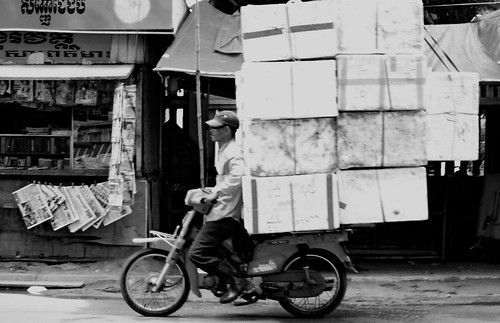
A COUPLE of years ago, while living in Cambodia, I stumbled onto a sketchy street on the outskirts of Phnom Penh. My Khmer was good enough for me to understand that the residents really didn't want me around but not good enough to negotiate a graceful exit. As one woman's shouts began to elevate, I raised a finger and said the magic word: moto! Three moto-taxi drivers peeled out to my aid. The red Honda in the middle looked fast, so I leaped on and shouted, "Go! Go! Go!" The driver opened the throttle and weaved through pedestrians and cars until we reached the safety of the wider city.
That ride left me thinking, Why don't we have these in the U.S.?
READ THE REST at Outside.
Two Wheeled ActREAD the rest of the Q&A at Outside
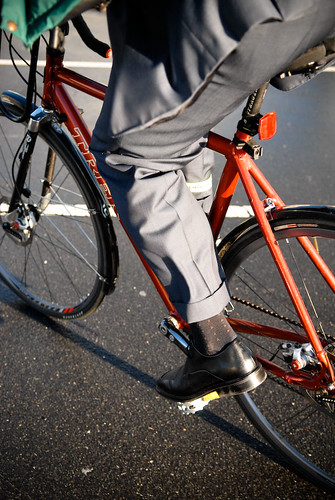
Bike-friendly Congressman Earl Blumenauer talks to Outside’s Matthew Fishbane.
Tucked deep down behind the new leases for off-shore drilling in the Comprehensive American Energy Security and Consumer Protection Act, a broad energy bill that the House passed last week , were the tiny remains of something called the Bicycle Commuter Act. Congressman Earl Blumenauer, of Oregon's Third District, originally sponsored the bill last session in hopes of bringing bicycles into the commuting mainstream by offering reimbursements and subsidies to the calorie-powered. We caught up with the Congressman, who regularly bikes to his DC offices, to talk about bike safety, infrastructure, and how the Portland model might spread.What's the basic idea of the Bike Commuter Act?
The concept is to provide equity for people who burn calories instead of fossil fuel.

 Get the feed, snout in the trough.


